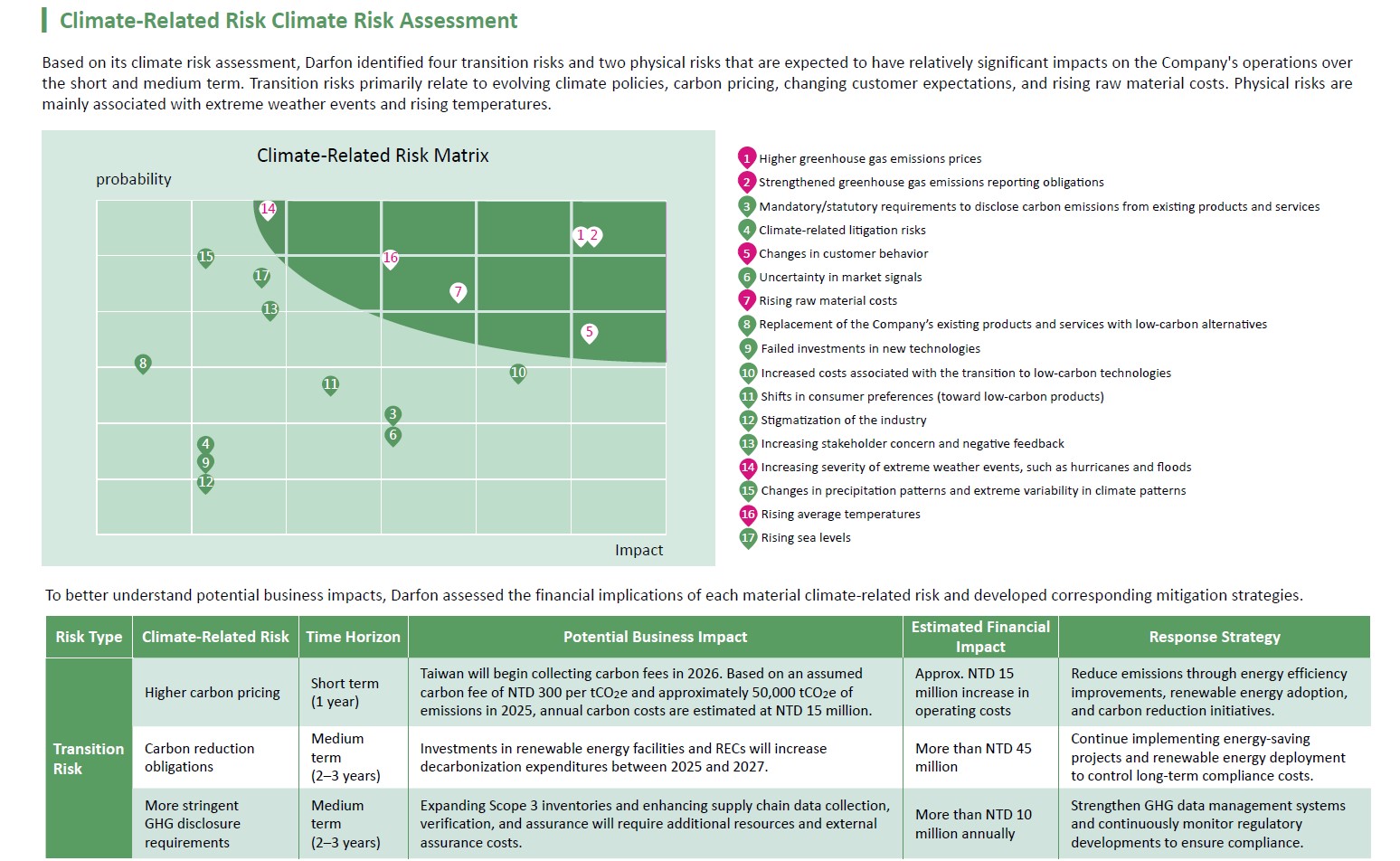
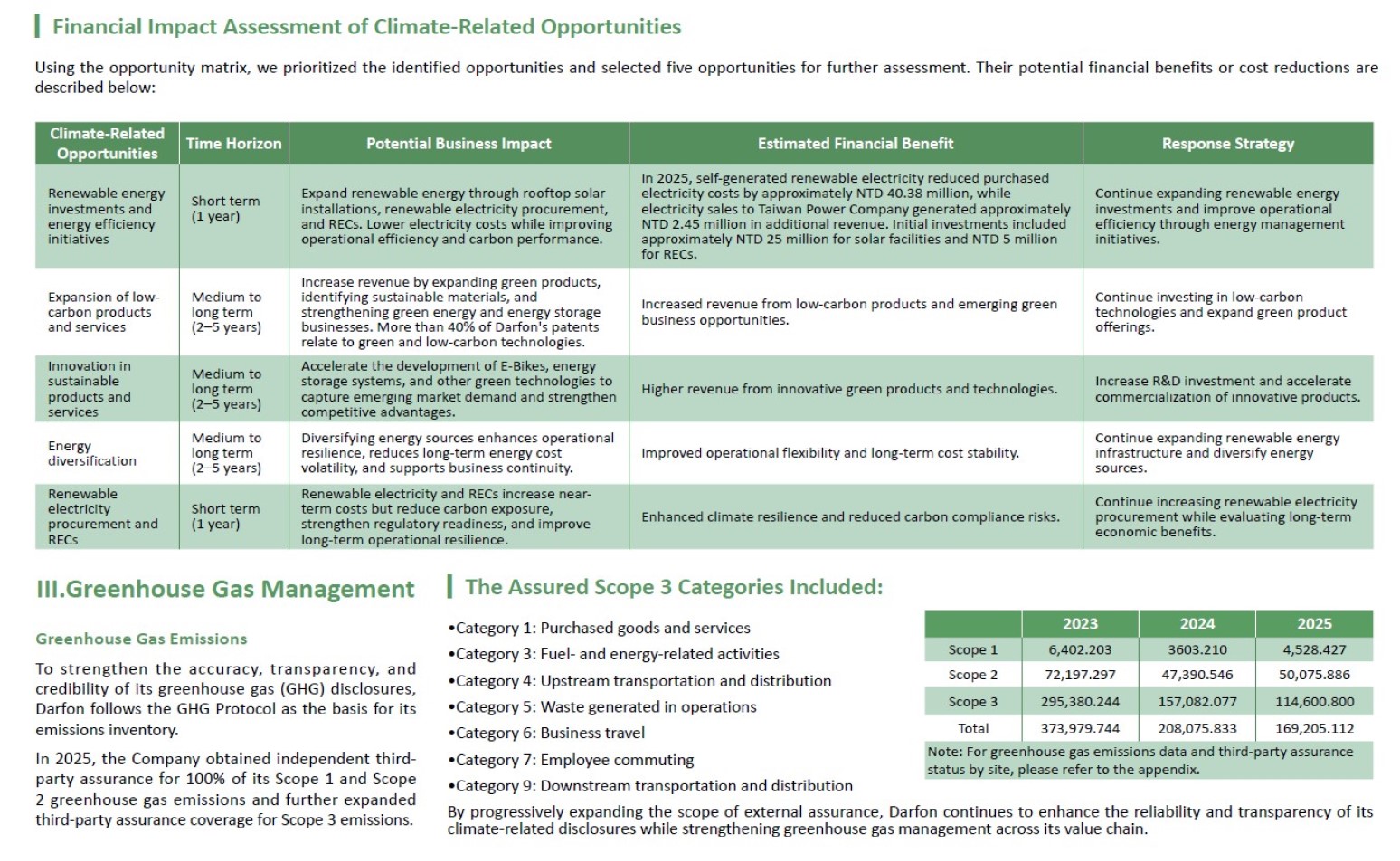
Darfon Electronics makes disclosures in accordance with the IFRS Sustainability Disclosure Standards, including IFRS S1 General Requirements for Disclosure of Sustainability-Related Financial Information and IFRS S2 Climate-Related Disclosures. Applying the principle of financial materiality, the Company discloses sustainability-related risks and opportunities that could reasonably be expected to affect Darfon’s cash flows, access to finance, and cost of capital over the short, medium, and long term. Darfon first published climate-related financial disclosures based on the Task Force on Climate-Related Financial Disclosures (TCFD) framework in 2022 and began assessing climate-related risks and opportunities. Through this assessment, we identified the following as the more significant climate-related risks currently facing the Company:
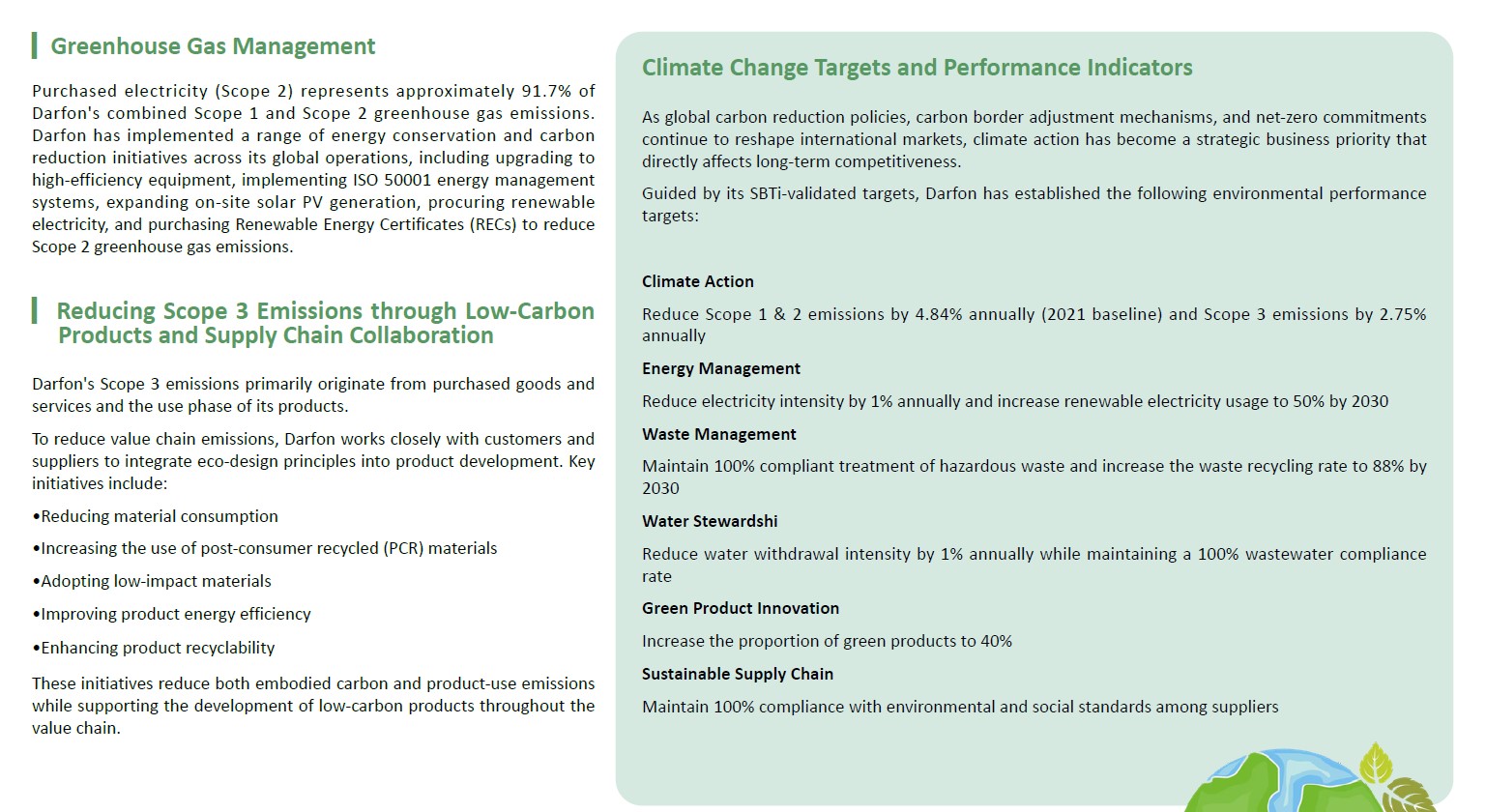
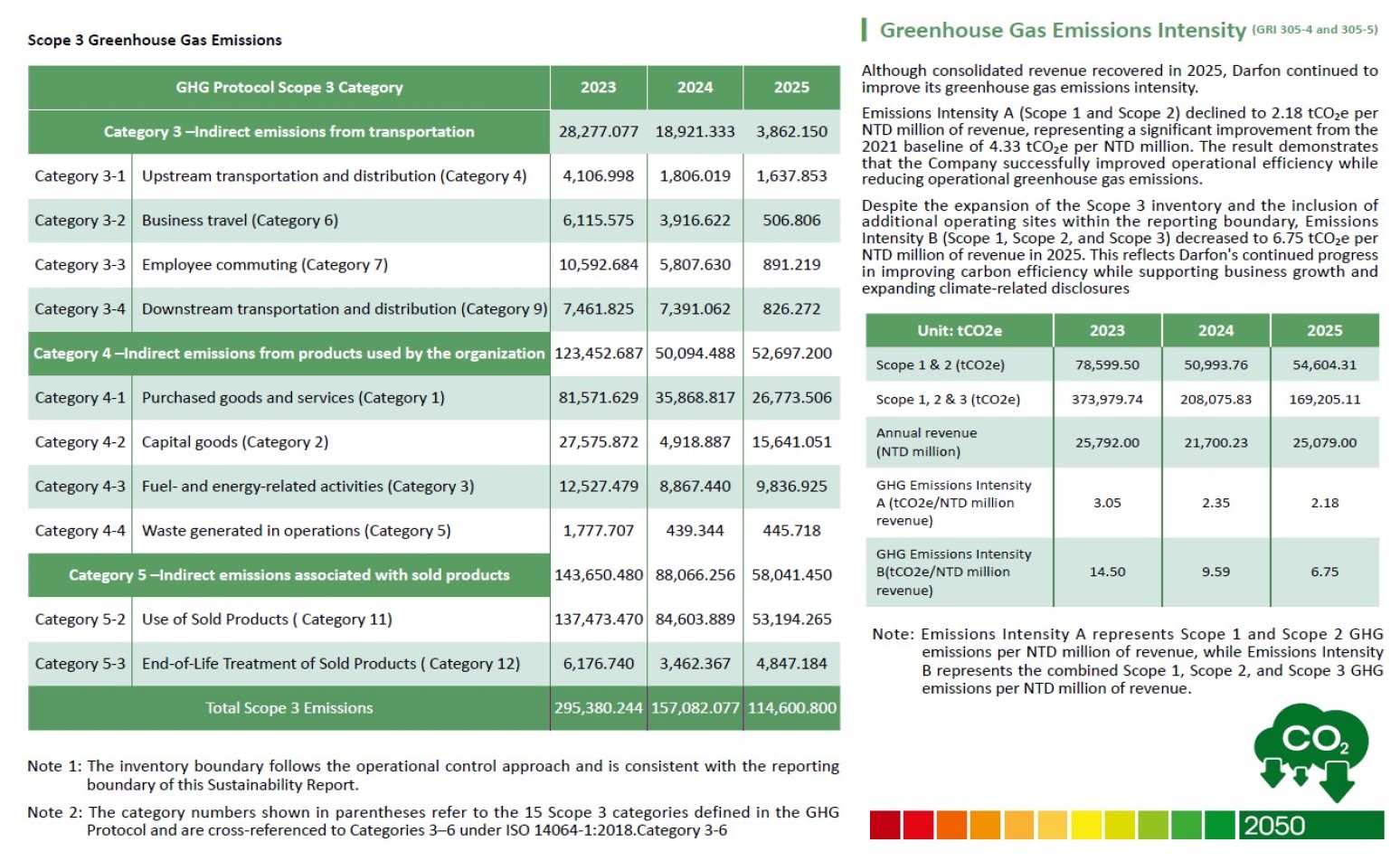
● Challenges in managing greenhouse gas emissions, including emissions from Darfon’s own operations and its supply chain;
● Increasing demand for low-carbon products and green energy, requiring the Company to accelerate its response to both the pressure and opportunities for product transformation arising from climate change.
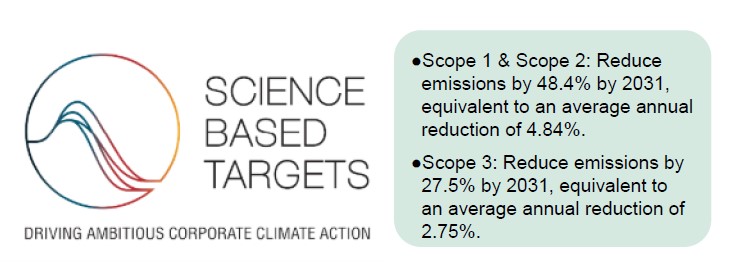
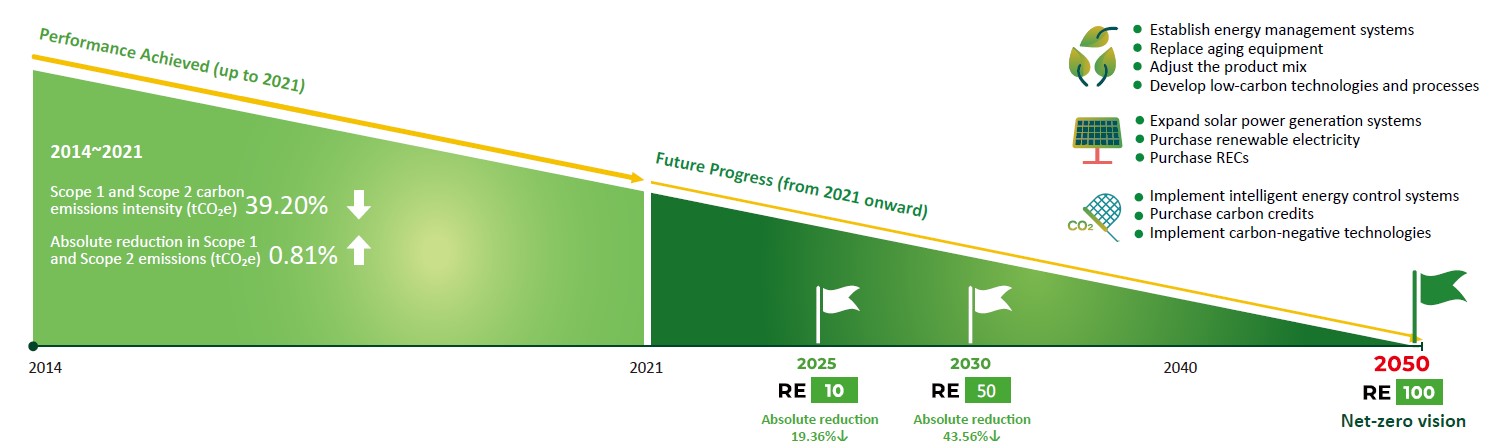
To respond proactively to global climate action, Darfon formally submitted its emissions reduction targets to the Science Based Targets initiative (SBTi) for validation in 2023 and committed to planning its emissions reduction pathway in line with limiting global warming to 1.5°C.
Using 2021 as the base year, Darfon established the following annual emissions reduction targets:
● Scope 1 & Scope 2: Reduce emissions by 4.84% annually, achieving a cumulative reduction of 48.4% by 2031.
● Scope 3: Reduce emissions by 2.75% annually, achieving a cumulative reduction of 27.5% by 2031.